The “Christian” Vikings
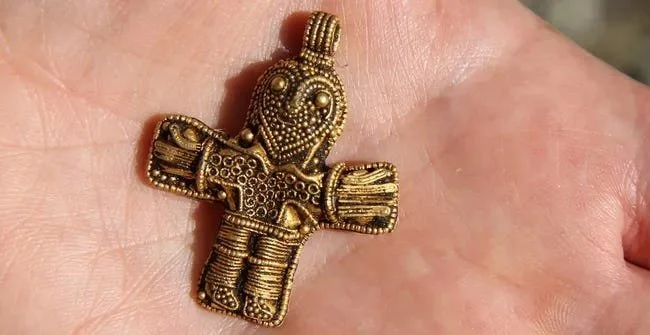
The below (brown resin crucifix) is often sold online (ebay, Etsy, etc.) as a replica of a crucifix said to be from Jutland, Denmark in the 11th century.
The oldest Viking crucifix thus far, however, was discovered by a metal detectorist near Aunslev on the island of Funen, Denmark and dates to the first half of the 10th century.
This illustrates that, with respect to Christianity, the Vikings (like all other people) were less likely to fully convert to Christianity as preached but, rather, embraced it, likely only in part, and recreated it in their own image.
Christianity didn’t conquer the Vikings. Time and geopolitics did. That is unless Christ was a Viking as he appears on these pieces.
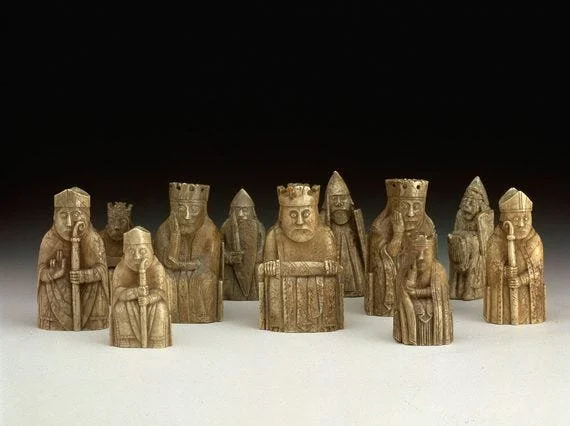
The Isle of Lewis Chessmen: Viking Influence Beyond the Viking Age
Discovery
On one account, it is said that the Isle of Lewis Chessmen were discovered in 1831, partially buried in Uig Bay, on the west coast of the Isle of Lewis (in the Outer Hebrides of Scotland) by one Malcolm Macleod who had tracked a cow that had strayed from the herd. As luck would have it, he happened upon a partially buried stone case containing the chessmen along with a number of other gaming pieces.
However, the veracity of this account is contested and the actual discovery story of the pieces remains a mystery. Another account has them being found in the ruins of a monastery and yet another in a souterrain (an Iron Age stone cellar).
What we do know is that they first appeared in Exhibit at the Society of Antiquaries of Scotland in 1831 on the permission of one Roderick Rirrie.