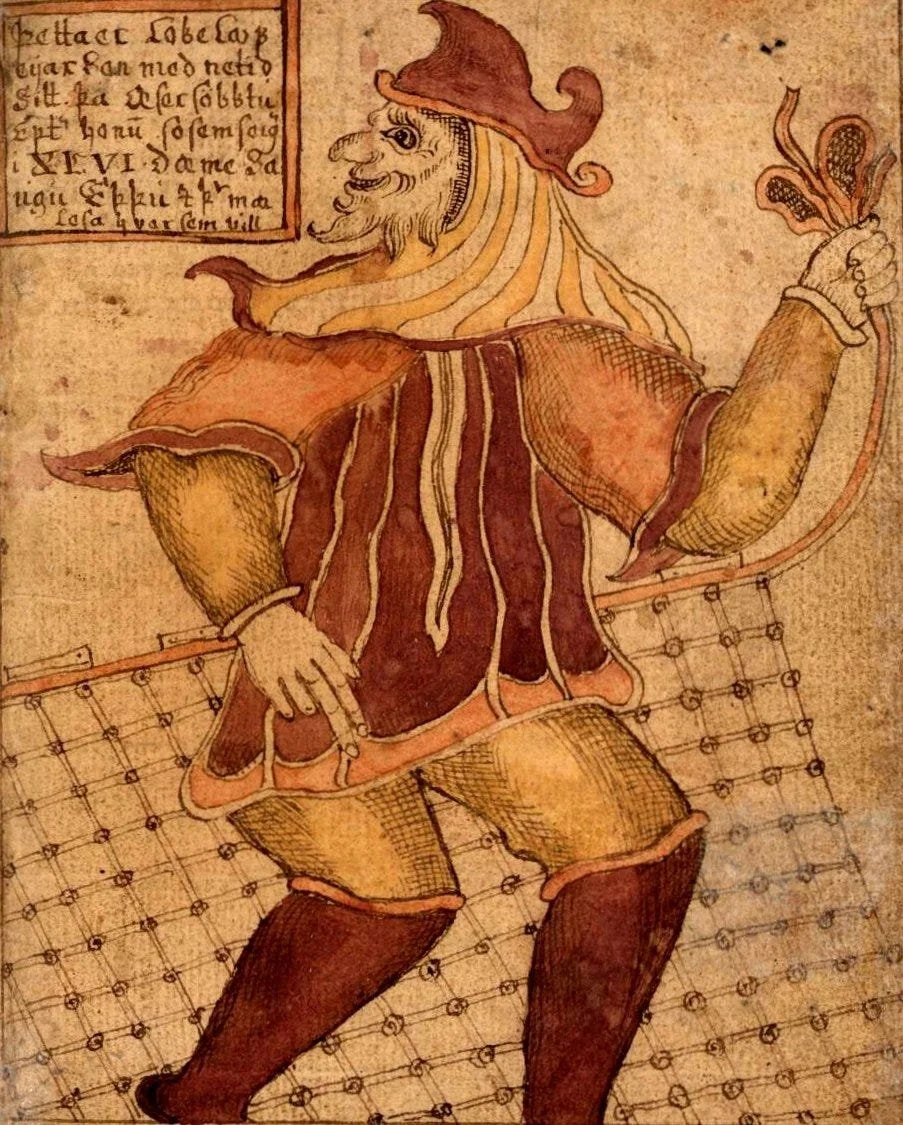
On the Veneration of Loki
As far as we know, the ancestors did not worship loki. why?
As I have stated elsewhere, I am skeptical of heathens who "work with" or in any shape or form worship Loki. I don't mean this to be offensive but, rather, it is their straying from the source texts and the traditions that gives me pause. This is a constructed (not reconstructed) practice with no literary or historical evidence supporting it.
That being said, I do believe that Loki plays an essential role in the myths and, as such, should not be neglected by heathens. Perhaps he should be respected for even he, as Fenrir (Loki's son), was Fated, as are we all, to be that which we are and to become that which we shall be.
What then can we learn from Loki if he is not to be venerated or worshipped (most traditional and academically trained heathens strongly discourage such, as do I)?
Loki is a being of great complexity. Much more than just a shapeshifter and trickster, in his own way, he does teach us much about living a life of self-empowerment as one who has taken charge of his own destiny (or at least fully embraced his Fate and come to terms with it).
He seemingly creates his own rules, when not disregarding the rules entirely, living by whim and personal fancy.
While he seemingly creates more chaos than not, he also helps to right these wrongs, even if begrudgingly.
He is often a traveling companion of Thor and blood brother to Odin, Odin even having sworn to drink only when Loki is present (though there is some debate on the actual extent of this oath).
When we look at Loki in the corpus of myth, we find that his presence raises some key questions for heathens today - Are we playing the game of life or are we but pawns in the game? Whether playing the game or being played, what fruits are being born out by our actions? Are they for weal or are they for woe?
Loki reminds of the constant struggle for balance between chaos and order. Humans are a part of that struggle. It is both an internal and external struggle.